Most first visits end without a conversion, and that is not a failure of the ad. Considered purchases are rarely decided in one sitting, and the visit that looks wasted is usually the one that created the awareness everything else depends on.
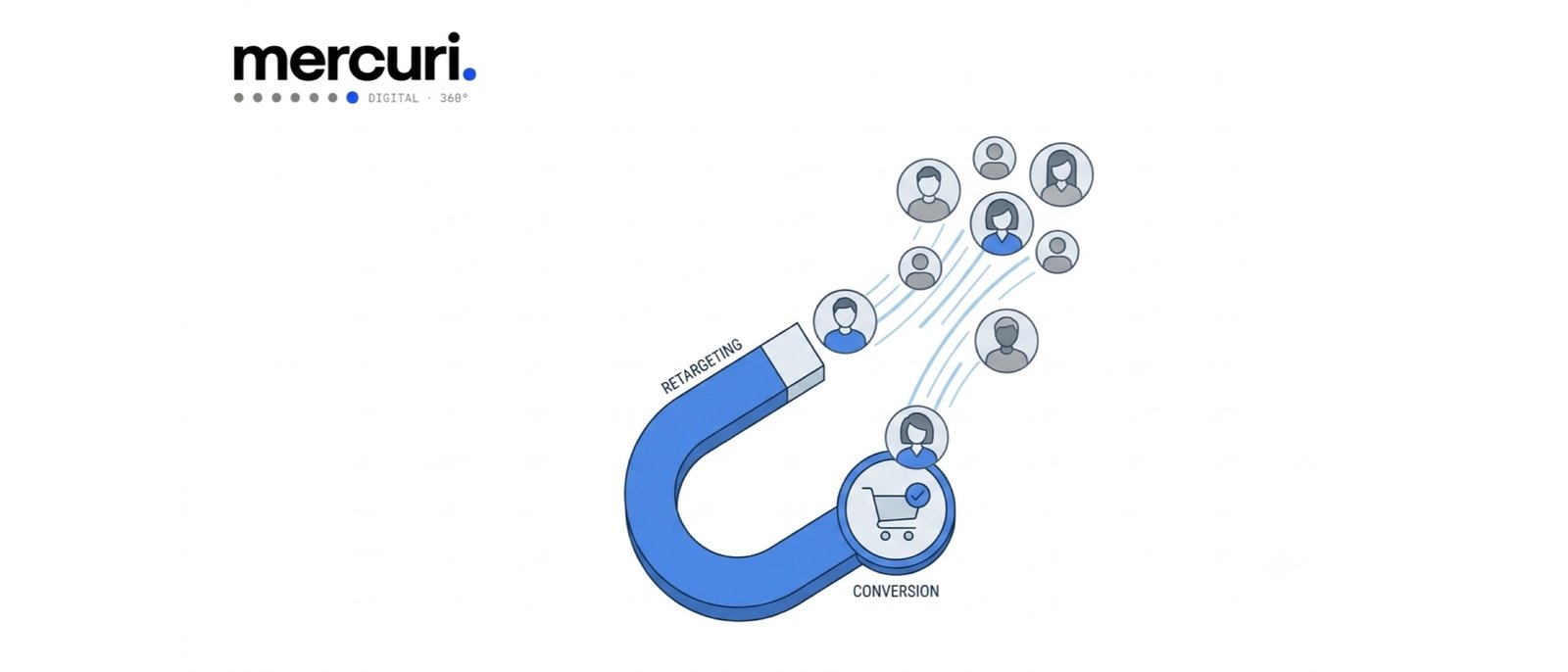
Retargeting is how you finish a conversation the first impression only started. It is also the single easiest channel to overrate, because it takes credit brilliantly and creates demand far less often than its reporting suggests.
Why the first visit rarely closes
People arrive at different distances from a decision. Someone comparing four providers is not going to commit on a first click no matter how good the landing page is, and someone researching a category they have never bought in needs to build a frame of reference before price means anything.
Treating all of those visitors as one audience is where most retargeting goes wrong. A person who read one page and left has almost nothing in common with someone who configured a quote and abandoned at the final step, yet the default setup shows both the same advert at the same frequency.
- Site visitors24,000
- Engaged7,400-69%
- High intent1,600-78%
- Purchased410-74%
Segment by depth of intent, not by recency alone
The useful axis is how far someone got, not simply how recently they were there. Depth tells you what they already know and what is left to resolve; recency only tells you whether they still remember you.
- 01Viewed
- 02Engaged
- 03Compared
- 04Abandoned
A shallow visitor needs a reason to care — the same job the original ad was doing, told differently. A deep visitor already cares and stopped for a specific reason: price, trust, timing or a missing detail. Showing that person a brand message wastes the most valuable audience you have.
- Viewed — reintroduce the proposition; assume nothing was remembered.
- Engaged — answer the obvious first objection before it becomes a reason to stop looking.
- Compared — give the differentiator, since they are actively weighing alternatives.
- Abandoned — remove the specific friction that stopped them, and say so plainly.
Frequency is the whole risk
Retargeting pools are small by construction, which means budget converts into frequency faster than anywhere else in the account. The same spend that is barely noticeable in prospecting will follow a few thousand people around all week.
Past a certain point the effect inverts. The advert stops being a reminder and starts being evidence that the company is either desperate or careless with data, and the brand damage does not show up in the campaign report at all. Cap frequency, cap the window, and exclude converters the moment they convert — the most common retargeting error in the wild is still advertising a product to people who already bought it.
The incrementality problem
Retargeting reports better than almost any other channel because it advertises exclusively to people already familiar with the brand. Those people convert at higher rates by definition, and last-click attribution hands the credit to whatever appeared most recently.
Some of that conversion would have happened anyway. The honest question is not what retargeting returned, but how much of the return existed only because the advert ran. The answer is almost always lower than the dashboard says, and occasionally it is close to zero.
Retargeting is the easiest channel to look good in and the hardest to prove.
A holdout answers it. Withhold retargeting from a random share of the eligible audience and compare conversion rates between the two groups. It costs a little revenue during the test and it is the only way to learn whether the line item is producing sales or documenting them.
What privacy changes did to the pools
Shorter cookie lifetimes, tracking prevention and consent requirements have all reduced how many people can be retargeted and for how long. Pools are smaller, windows are shorter, and lists decay faster than the platform interface implies.
The practical response is to lean harder on first-party signals — logged-in behaviour, email engagement, server-side events — and to accept smaller, better-defined audiences instead of trying to rebuild the old scale. A large pool of poorly identified people was never worth much anyway.
The channel changes the job
Retargeting behaves differently depending on where it runs, and copying one channel's settings into another is a reliable way to waste money.
Social placements interrupt. They reach people who were not thinking about the purchase, which makes creative quality decisive and frequency dangerous. Display is cheap enough that frequency escalates almost invisibly, so caps matter more there than anywhere else. Search remarketing is different in kind — it does not show anyone anything until they search again, which makes it the least intrusive and often the most incremental form of the tactic.
Email and owned channels sit alongside all of it and cost nothing per impression. A well-timed message to someone who abandoned a form will usually outperform any paid placement aimed at the same person, and it does not consume a frequency budget.
Creative that does not feel like surveillance
The failure mode everyone recognises is the product they looked at once, following them for a fortnight. It is technically precise targeting and it reads as intrusive, because the advert demonstrates that it knows exactly what was browsed without offering any reason to return.
Better retargeting adds something. A reason the product suits the use case, an answer to the obvious hesitation, proof from someone comparable, a detail the first visit did not surface. The test is whether the advert would still make sense to someone seeing it cold — if it only works as a reminder, it will wear out fast and irritate on the way.
When not to retarget
Retargeting needs a funnel with a gap in it. If purchases are genuinely impulsive and complete in one session, there is no gap to work in and the budget belongs at the top. If traffic volume is low, the pools will never reach the size where delivery is efficient, and the spend will simply concentrate into punishing frequency.
Used properly it is one of the highest-return things in an account. Used as a default line item nobody audits, it is a quietly expensive way to take credit for sales that were already coming.