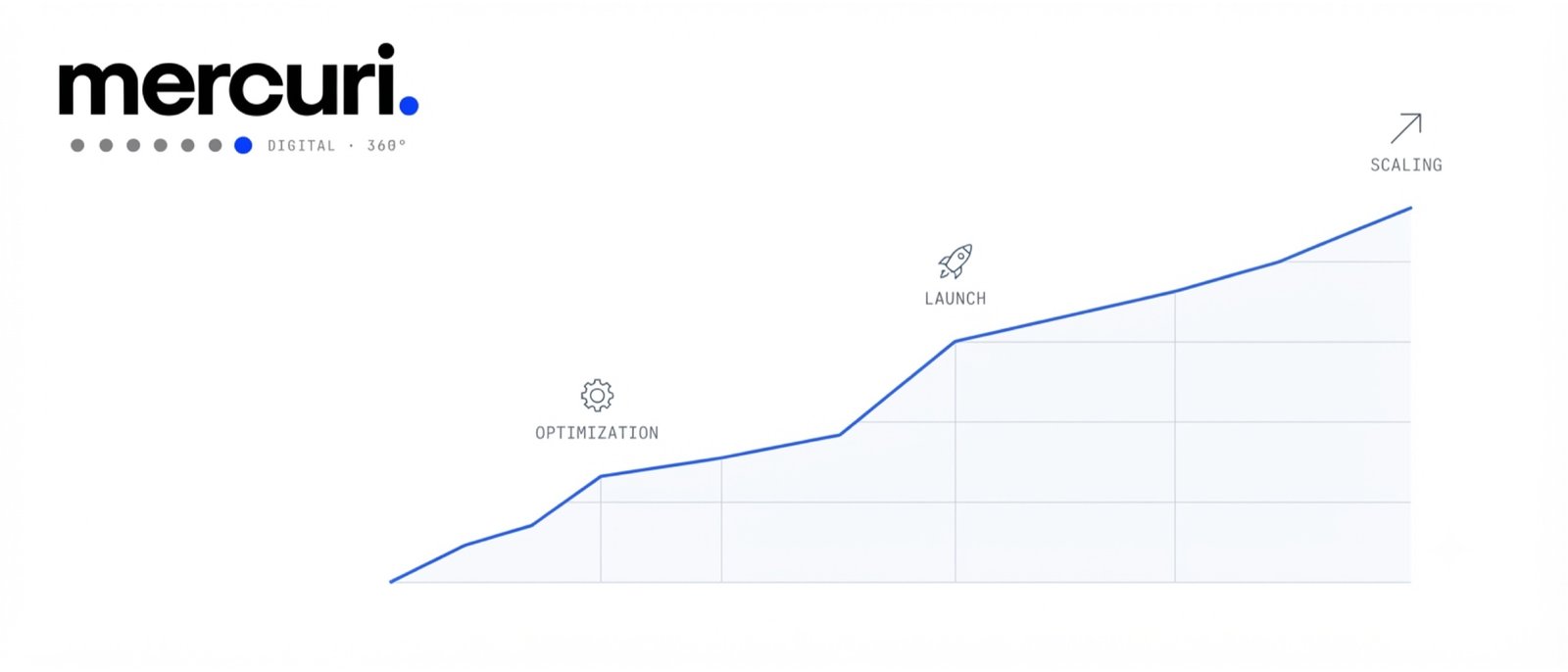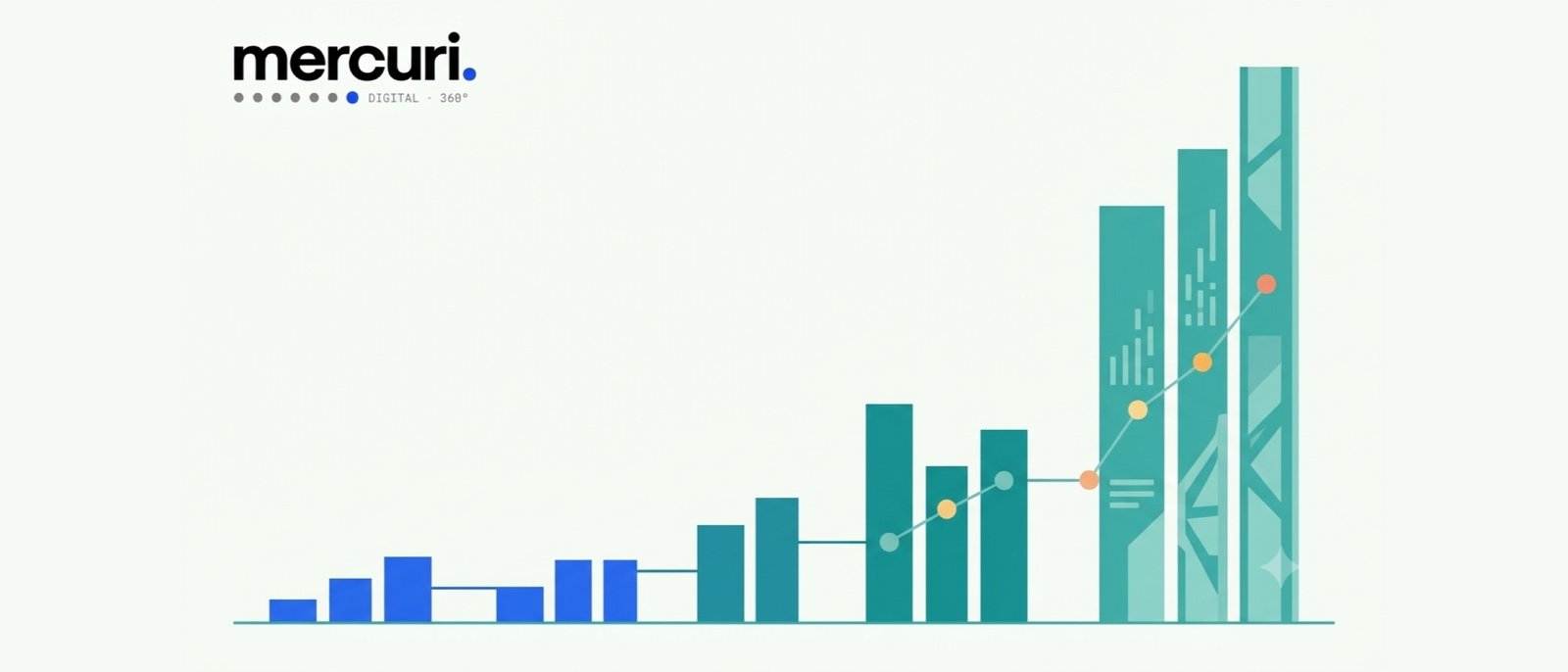
Scaling on Meta is rarely a budget problem. It is a structure problem, a creative-volume problem and a signal-quality problem, usually in that order. Push spend without addressing those and cost per acquisition climbs faster than volume does.
The uncomfortable part is that the account usually looks fine right up until it does not. A campaign returns well at one budget, gets doubled because it is working, and is unrecognisable two weeks later.
Structure first: consolidate before you spend
Automated bidding needs conversion volume to learn. Spreading budget across many small ad sets starves each one of the events it needs, and an account full of under-fed ad sets is an account permanently optimising on noise.
Consolidation is usually the first genuine unlock. Fewer ad sets, each carrying enough volume to exit the learning phase and stay out of it, beats a granular structure that feels controlled and behaves erratically. The instinct to segment finely is a holdover from an era when manual targeting was the lever.
- 01Consolidate
- 02Fix signal
- 03Add creative
- 04Raise budget
Signal quality decides the ceiling
The system can only optimise toward what it can see. Browser-based tracking alone now misses a meaningful share of conversions, and every missed event is a data point the algorithm never learns from. The result is not just under-reporting; it is worse targeting.
Server-side conversion tracking, good event matching and a deduplicated setup between browser and server are not reporting hygiene. They directly determine how well delivery performs, which is why accounts often improve immediately after a signal fix that changed nothing about targeting or creative.
Optimising toward the right event matters just as much. A campaign pointed at add-to-cart will faithfully find people who add to cart and leave. Point it as far down the funnel as your volume supports, and no further.
Creative volume is the real constraint
Targeting is increasingly automated and the auction is not yours to control. Creative is the variable genuinely still in your hands, and it decays predictably as frequency builds inside an audience.
More budget against the same pool does not buy proportionally more reach; a large share of it buys repetition. That is why a concept that lasted six weeks at one budget lasts two at triple the spend, and why scaling without a matching creative pipeline is a plan to decline on schedule.
- Week 1100
- Week 281
- Week 363
- Week 449
Volume alone is not the answer either. Thirty edits of one idea fatigue at roughly the speed of one idea, because fatigue attaches to the concept rather than the file. What extends a campaign is a stock of distinct angles.
Vertical and horizontal scaling
Vertical scaling means more budget into what already works. It is faster and it hits a ceiling, because the audience is finite and frequency does the rest. Raise in increments the system can absorb rather than in jumps that reset learning.
Horizontal scaling means more surface area: new angles, new formats, new geographies, new placements. It is slower, messier and the only thing that raises the ceiling rather than approaching it faster.
- Raise budgets in steps, not multiples, and leave time between them.
- Group markets by value per customer rather than by convenience.
- Add new concepts continuously, not in response to a bad week.
- Retire on a rule agreed in advance, so nobody defends a tired winner.
Read the right numbers while scaling
Platform-reported return rises and falls with attribution settings, and the temptation during a scale-up is to trust whichever window tells the better story. A blended view against actual revenue is slower and duller and it is the only one that survives a finance conversation.
Watch marginal performance rather than average. The question when adding budget is never what the account returned overall; it is what the last increment returned. Averages stay comfortable long after the newest spend stopped paying for itself.
Scaling is not spending more on what worked. It is finding out what still works at a size you have not tried yet.
Audiences: broad is usually right now
Detailed interest targeting was the central skill for years and has steadily lost ground to the delivery system. Given a clean conversion signal and enough volume, broad targeting routinely matches or beats hand-built audiences, because the model is finding patterns no interest list encodes.
This is uncomfortable for teams whose expertise was in audience construction, and it is where a lot of accounts get stuck. Narrow targeting at scale mostly guarantees high frequency against a small pool — the exact condition that makes scaling expensive.
Where targeting still earns its keep is exclusion. Removing existing customers, recent purchasers and audiences you have deliberately assigned elsewhere prevents the system from buying conversions that were already coming, which is the quietest form of wasted spend there is.
Testing that produces answers
Most account testing produces opinions rather than findings, usually because too much changed at once or the test was stopped the moment it looked decisive.
Change one variable. Give it enough conversions that the result is not noise. Decide the success measure before starting, and write down what would count as a failure — a test with no failure condition is a demonstration.
- Creative concepts — the highest-leverage thing to test and the most often tested casually.
- Optimisation event — moving deeper down the funnel where volume allows.
- Structure — consolidated against segmented, measured over weeks rather than days.
- Landing experience — frequently the largest single lift available and rarely owned by the media team.
When the account stalls
Plateaus are normal and usually have a short list of causes. Working through them in order is faster than the common approach of changing several things and hoping.
Check frequency against audience size first, because that separates a creative problem from a reach problem. Then check whether conversion volume per ad set is high enough to keep delivery out of learning. Then check whether signal quality degraded — a tracking change or consent update can quietly reduce the events the system optimises on. Only then ask whether the creative has simply run its course.
The usual failure
The common pattern is recognisable: a campaign works, budget doubles overnight, learning resets, performance dips, panic edits follow, and the resulting volatility is blamed on the platform. Almost none of that was caused by the auction.
Scaling well is mostly patience applied in the right order — structure, then signal, then creative, then money. Reversing that order is what makes scaling feel like luck.